
太阳耀斑
要上小学了,你准备好了吗——杭州英伦幼儿园幼小衔接专题讲座_我的网站

一 |
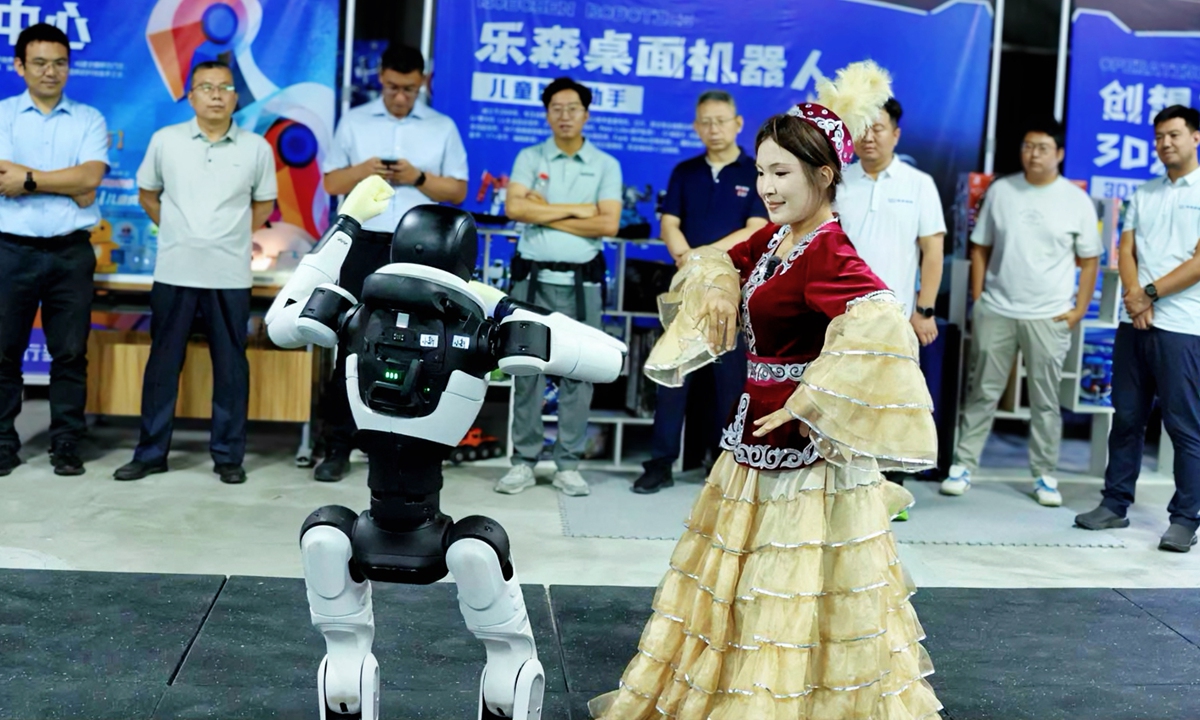
China's market landscape experienced a structural optimization in the first half of 2026, powered by a lineup of emerging and future-oriented industries.
Official data from the State Administration for Market Regulation (SAMR) shows 561,000 new enterprises were registered across China's strategic emerging and future industries, spanning next-generation information technology, high-end equipment manufacturing, generative artificial intelligence (AI) and humanoid robotics.
The rapid expansion of these new market players is revamping China's industrial layout and fast-tracking the cultivation of new quality productive forces, underpinning steady high-quality economic upgrading, experts said.
Cutting-edge technology sectors stood out as the brightest growth spots, posting explosive year-on-year expansion. The generative AI industry recorded a 28 percent surge in new start-ups with 55,000 newly established firms, while the humanoid robot sector saw a 9.5 percent rise, adding 116,000 new enterprises.
"It shows that China's innovation momentum is exceptionally strong and remarkably broad-based — a trait that is virtually unique in the global landscape," Chen Jing, a vice president of the Technology and Strategy Research Institute, told the Global Times on Sunday. "The explosive growth of new enterprises in AI and robotics reflects the extraordinary depth and diversity of China's industrial ecosystem."
Outside high‑tech sectors, 3.957 million new services‑sector enterprises were established and booming emerging‑consumption businesses injected fresh impetus into domestic demand, the SAMR said.
The number of new firms in software and telecommunications services rose 3.3 percent to 322,000. Inspection‑and‑testing businesses soared 43.9 percent, and entities dedicated to the commercialization of scientific‑research achievements climbed 6.8 percent to 459,000.
Manufacturers accelerated industrial upgrading with companies moving up the value‑chain ladder, the SAMR said.
High‑end equipment industries have maintained growth during the first half, with 28,000 newly registered firms and a year‑on‑year increase of 2.5 percent.
A total of 330,000 high‑tech‑manufacturing enterprises were operating as of the end of June, including 15,000 newly established ones. Start‑ups engaged in the production of spacecraft and launch vehicles rocketed 185.7 percent. New producers of fiber optic cables climbed 129.4 percent and integrated‑circuit businesses increased by 24.2 percent.
"We are witnessing a dual-engine growth model, where new consumption in the services sector and high-tech services reinforce each other, while the digital and real economies integrate at an accelerating pace. At the same time, the intelligent transformation of manufacturing is picking up speed," Chen said.
The dividends from this industrial transformation are generating a powerful multiplier effect, creating a virtuous cycle led by innovation, Chen noted.
"The first‑half growth and structural shifts among China's market‑based businesses mirrored the country's overall economic momentum and industrial makeup. New‑emerging sectors, core strategic pillar industries and forward‑looking future industries registered the fastest business expansion," Tian Yun, a veteran economist, told the Global Times on Sunday.
These solid achievements fully reflect the success of China's innovation-driven economic strategy.
Strong policy support for specialized, sophisticated, unique and innovative enterprises has fueled this industrial boom while these market players have helped China shore up, upgrade and extend its industrial chains, Tian noted.
This business boom lines up with this year's stellar foreign trade figures, Tian noted.
China's exports rose 23.9 percent year-on-year in dollar terms in July, data from the General Administration of Customs showed on Friday.
Exports of high-tech products, including industrial robots and 3D printers, surged by more than 50 percent year-on-year, outpacing the 39 percent growth recorded in the first half of the year, according to the Xinhua News Agency.
The growing pool of high‑quality market players signaled lasting improvements in China's global competitiveness, industrial upgrading capacity and the standard of goods and services. Broader product ranges, better‑made commodities and improved supporting services will deliver durable new‑growth momentum, Tian noted.
。 2024.12.18 “衔”而有道 适性成长 在孩子的成长过程中,幼小衔接是一个至关重要的阶段。它就像一座桥梁,连接着孩子的学前时光和小学时光。为了帮助家长们更好地了解幼小衔接的奥秘,我们有幸邀请到了一位在教育领域极具影响力的专家——“乐爸”,来为我们开展一场精彩绝伦的幼小衔接讲座。 01 讲座回顾 首先,在幼小衔接的概念理解上,“乐爸”强调这不仅仅是知识的简单传递,更是孩子身心发展、学习习惯、社会适应能力等全方位的衔接。 其次,针对当前幼小衔接存在的误区,“乐爸”进行了详细解读。并针对如何做好幼小衔接给出了一系列实用的建议。 除了幼小衔接本身,择校也是很多家长关心的问题。

二 | “乐爸”根据自己的经验,为家长们提供了一些择校建议。 02 家长感悟 这场讲座就像一盏明灯,为家长们在幼小衔接的迷茫之路上照亮了方向。它让家长们认识到幼小衔接的重要性和复杂性,避免了盲目跟风和错误决策。讲座结束后,我们也采访了几位家长,听听他们的收获和感悟。 青青爸爸:“以前我总是担心孩子上小学后跟不上课程进度,想着要不要提前给孩子报个补习班。但是听完讲座后,我明白了幼小衔接最重要的是培养孩子的习惯。从现在开始,我会更加注重孩子的生活习惯和学习习惯培养,让孩子在一个健康、有序的环境中成长。” 洋洋爸爸:“看到周围很多家长都在为孩子的幼小衔接忙得焦头烂额,我也难免会焦虑。但是这场讲座让我认识到,每个孩子都有自己的成长节奏,我们不能过度焦虑,而应该关注孩子的身心发展,根据孩子的实际情况来引导他们。” 03 孩子入学能力准备清单 1.能说出家庭住址、父母姓名及电话号码; 2.会独立整理玩具、文具、书包等,并保管好自己的物品; 3.会穿脱衣服、会吃饭喝水、会独立如厕、会系鞋带、会撑伞收伞; 4.认识自己的名字,会写自己的名字; 5.能安静地和父母看完一本绘本; 6.能数到20以上,理解加减法的意思,通过实物操作进行10以内加减法; 7.学会跳绳,每分钟能跳绳20个以上(及17良87优109/117); 8.分得清左手和右手; 9.会重复简单的口信,能记住并执行两到三个任务; 10.能与同伴友好相处,会主动寻求帮助。

三 | 亲爱的家长们,让我们一起关注孩子的幼小衔接,用科学的方法和满满的爱,为他们的成长之路保驾护航!。
Current article:http://xai1.laojiusidaosenleliao.bond/di025ew/lrja.html
Published on:13:57:32